Learn
GLP-1 side effects: what to expect and how to manage them
GLP-1 medications can be highly effective for weight loss, but like any treatment, they come with potential side effects. The good news is that most are mild, temporary, and manageable with the right approach and provider guidance.
Concerned about side effects?
Talk with a licensed provider to understand your risk, how to minimize side effects, and whether GLP-1 treatment is a good fit for you.
Common side effects (what most people experience)
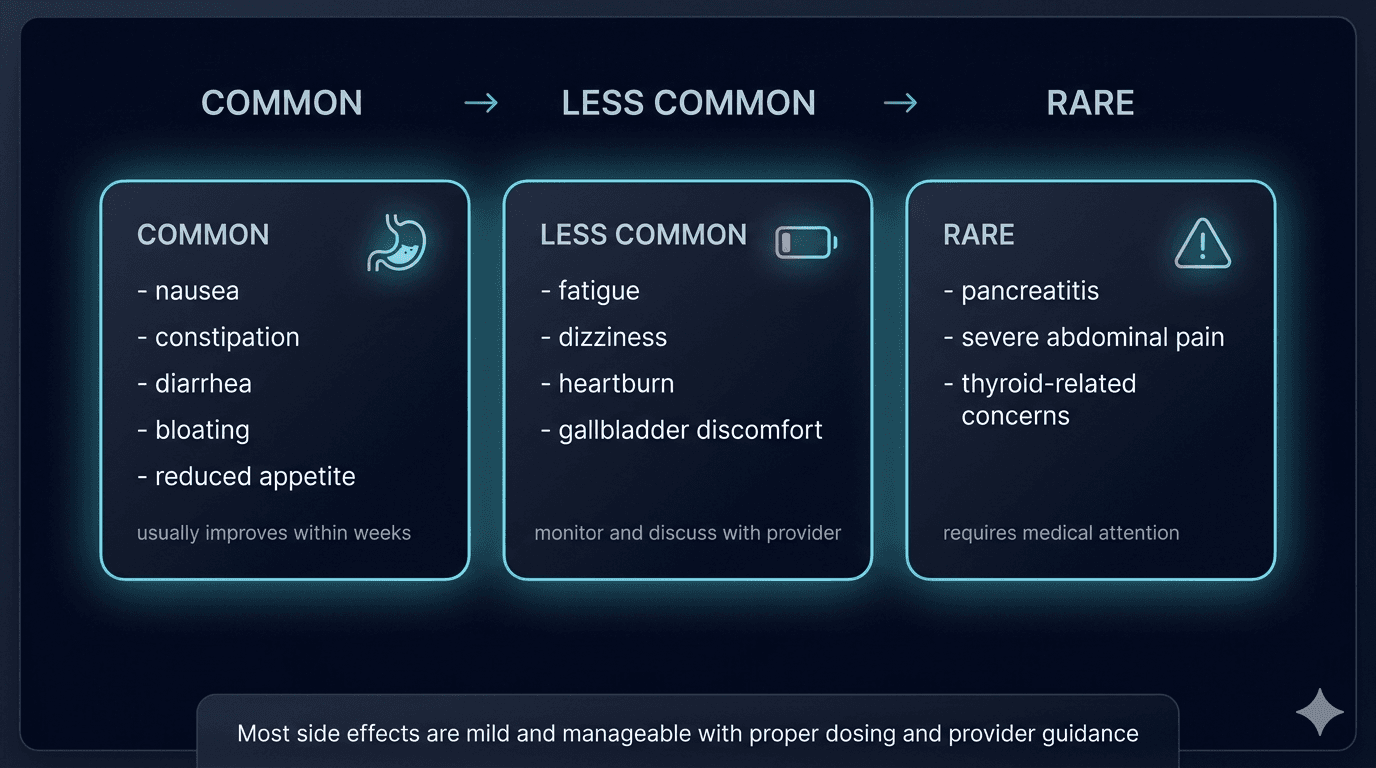
The majority of people experience mild gastrointestinal side effects early in treatment. These are usually temporary and improve as your body adjusts.
- Nausea
- Constipation or diarrhea
- Bloating or stomach discomfort
- Reduced appetite
- Fatigue or mild headaches
Starting at a lower dose and gradually increasing under provider supervision is one of the most effective ways to reduce these symptoms.
Less common and rare risks
While less common, some side effects require closer monitoring or medical attention.
- Gallbladder-related issues
- Persistent dizziness or weakness
- Pancreatitis (rare but serious)
- Severe abdominal pain
- Possible thyroid-related concerns (rare)
These risks are uncommon, but they are part of why a provider-led approach matters.
Why side effects happen
GLP-1 medications slow gastric emptying and change how your body signals hunger and fullness. This is part of what makes them effective—but also why digestive side effects are common early on.
If you want to understand the mechanism in more detail, read our GLP-1 explained guide.
How to reduce and manage side effects
- Eat smaller, slower meals
- Avoid high-fat or heavy foods early in treatment
- Stay well hydrated
- Follow a gradual dose escalation plan
- Maintain protein intake and resistance training to protect muscle
A structured medical weight-loss program can help guide these adjustments.
When to seek medical attention
Contact a provider immediately if you experience severe abdominal pain, persistent vomiting, signs of dehydration, or any symptoms that feel significantly worse or unusual.
Want a personalized plan?
A provider can help you minimize side effects while maximizing results with a safe, structured approach.
Frequently asked questions
How long do GLP-1 side effects usually last?
Most common side effects like nausea or digestive discomfort tend to improve within the first few weeks as your body adjusts, especially with gradual dose increases.
Is nausea the most common side effect?
Yes. Nausea is the most frequently reported side effect, particularly early in treatment. It is usually temporary and manageable with dosing and dietary adjustments.
Are GLP-1 medications safe long-term?
They are generally considered safe when prescribed and monitored by a licensed provider, but long-term considerations like muscle loss, gallbladder issues, or rare complications should be discussed.
When should I contact a provider?
You should seek medical attention for severe abdominal pain, persistent vomiting, signs of pancreatitis, or any concerning or worsening symptoms.
Do side effects mean the medication is not working for me?
Not necessarily. Mild side effects are common early on and often improve. A provider can adjust your dose or plan to improve tolerability.