What are GLP-1 weight-loss medications?
GLP-1 medications are a class of treatments that help reduce appetite, improve blood sugar control, and support meaningful weight loss when combined with lifestyle changes. If you are trying to understand whether this type of treatment may fit your situation, you can start with our GLP-1 eligibility tool or explore our GLP-1 treatment overview.
Most people complete the next step in under 2 minutes.
Why GLP-1s are changing weight-loss treatment
Unlike older weight-loss medications, GLP-1 receptor agonists work with your body’s natural hormone systems to regulate hunger and satiety. Many patients see 10–15% weight loss, with some achieving even more depending on the medication and adherence.
These medications are typically prescribed as part of a structured, provider-led program rather than a standalone solution.
How GLP-1 medications work
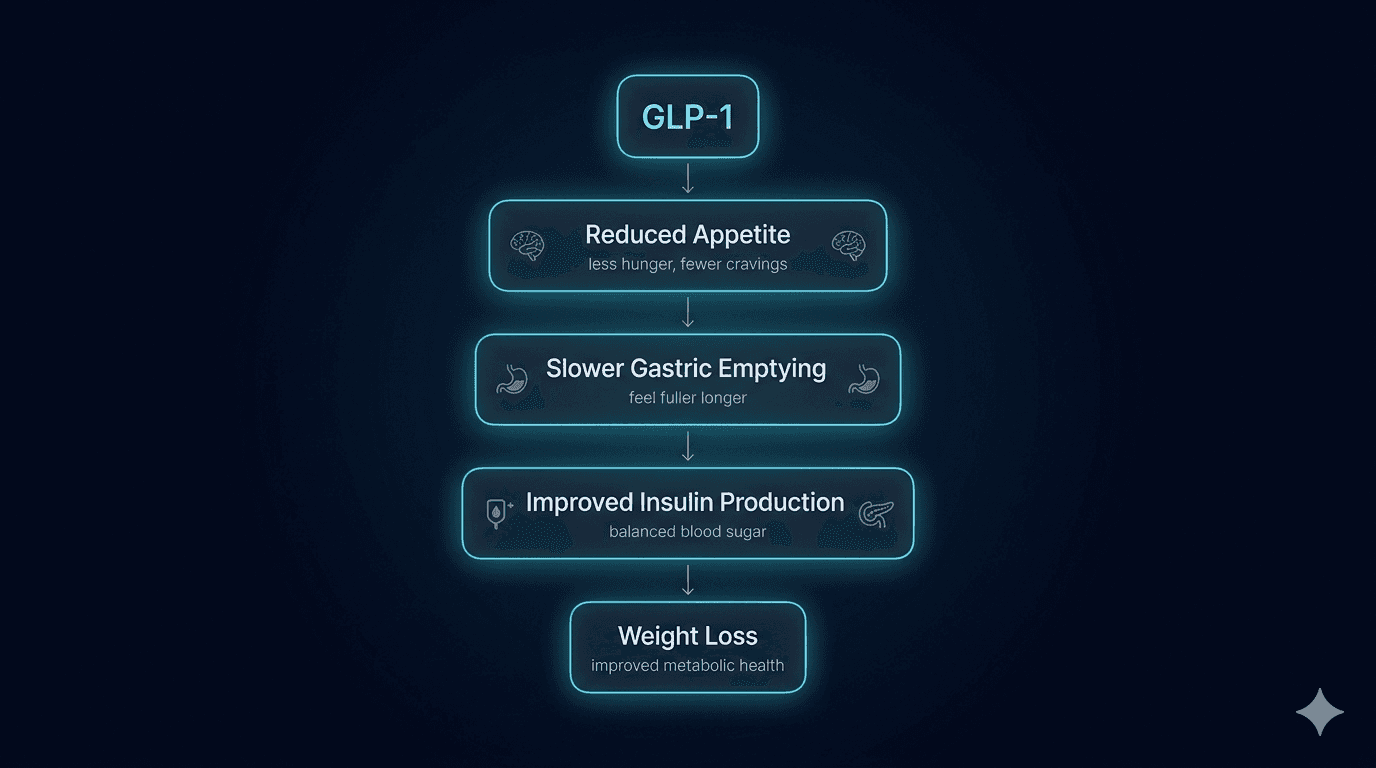
GLP-1 is a naturally occurring hormone released after eating. It signals fullness to the brain, slows stomach emptying, and helps regulate insulin and blood sugar levels.
Medications like semaglutide and tirzepatide amplify these effects, helping reduce cravings and caloric intake over time. If you want a deeper breakdown of who these medications are usually intended for, we will also be building a dedicated GLP-1 eligibility guide.
Common GLP-1 medications
- Semaglutide (Wegovy®, Ozempic®)
- Tirzepatide (Zepbound®, Mounjaro®)
- Liraglutide (Saxenda®)
These medications differ in dosing, effectiveness, and approval status. A provider helps determine which option is most appropriate. If you want a quick practical reference, you can also review our GLP-1 dosage calculator.
Benefits beyond weight loss
- Improved blood sugar control
- Reduced appetite and cravings
- Potential cardiovascular benefits
Before starting treatment, it can also be helpful to understand your baseline weight category and screening criteria using our BMI calculator and eligibility tool.
GLP-1 vs other weight-loss medications
Older medications often rely on stimulants or appetite suppression alone. GLP-1s target metabolic pathways and tend to produce more consistent and sustainable results.
Cost and side-effect profiles can also influence whether GLP-1s are the right fit. We will be publishing more detailed pages on GLP-1 cost and GLP-1 side effects to help answer those questions.
Do you still need lifestyle changes?
Yes. Nutrition, exercise, sleep, and stress management all play a critical role in long-term success. GLP-1 medications work best when combined with these behaviors. They are usually most effective as part of a structured medical weight-loss program, not as a standalone shortcut.
Frequently asked questions
How much weight can I lose with GLP-1 medication?
Many patients lose a meaningful percentage of body weight over time, though results vary based on medication choice, adherence, lifestyle habits, and clinical factors.
How quickly do GLP-1 medications start working?
Appetite changes often begin within weeks, with more gradual weight-loss changes occurring over months.
Are GLP-1 medications injections?
Many of the most commonly used GLP-1 medications are weekly injections, though some oral options exist depending on the medication and clinical use case.
Who usually qualifies for GLP-1 treatment?
Qualification often depends on BMI, weight-related health conditions, prior lifestyle efforts, medication risks, and provider judgment. Our GLP-1 eligibility tool is a good starting point.
What are the most common side effects?
Nausea, GI discomfort, constipation, diarrhea, and appetite changes are commonly discussed. We will also be publishing a more detailed GLP-1 side-effects guide.
How much do GLP-1 medications cost?
Costs vary widely based on insurance coverage, branded versus compounded options, and whether the medication is part of a broader program. We will be publishing a dedicated GLP-1 cost guide.
Most people complete the next step in under 2 minutes.