Learn
Do you qualify for GLP-1 weight-loss medication?
GLP-1 eligibility usually depends on more than a single number. BMI matters, but so do weight-related health conditions, safety considerations, prior weight-loss efforts, and provider judgment. If you want a quick personalized starting point, use our GLP-1 eligibility tool.
Want the quickest next step?
Use the screening tool to estimate whether GLP-1 treatment may be worth exploring based on your BMI and health profile.
Most people complete the next step in under 2 minutes.
Who GLP-1 treatment is often for
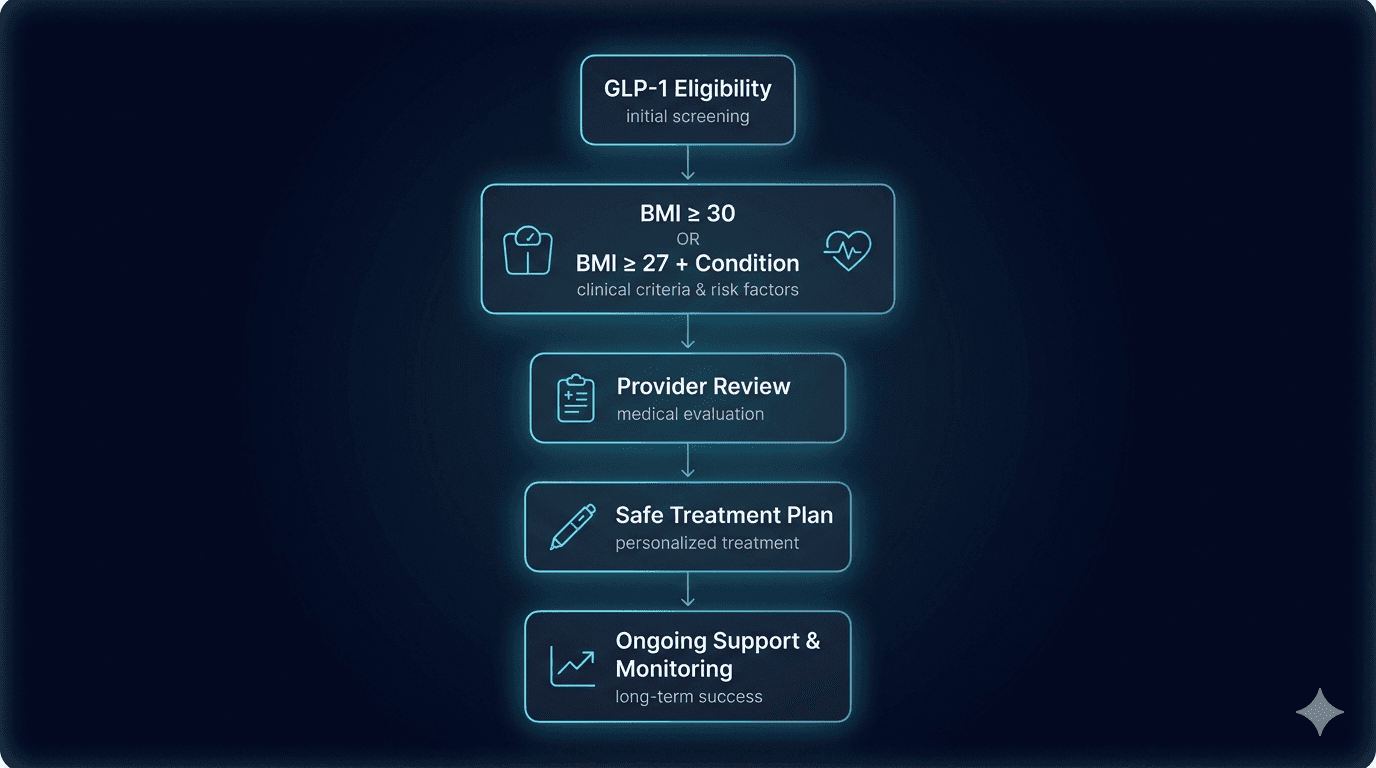
Many GLP-1 treatment pathways begin with adults who have a BMI of 30 or higher, or a BMI of 27 or higher with weight-related health conditions such as high blood pressure, type 2 diabetes, prediabetes, high cholesterol, or sleep apnea.
That said, a provider is not just checking a BMI box. They are looking at whether medication-based treatment makes sense for your broader clinical situation, goals, and ability to safely follow a structured plan.
If you are still trying to understand how these medications work, start with our GLP-1 explained guide.
Additional factors providers often consider
- Previous attempts at weight loss through diet, exercise, or structured programs
- Current medications and possible interactions
- Medical history, including GI conditions and endocrine issues
- Pregnancy, breastfeeding, or plans for pregnancy
- Readiness to follow a long-term treatment plan
- Willingness to pair medication with lifestyle changes
This is one reason a provider-led medical weight-loss program can be more useful than a generic online quiz alone.
Who may need a different treatment path or closer review
Some people need additional caution, more direct clinician review, or an alternative plan altogether. That can include pregnancy or breastfeeding considerations, a history of pancreatitis, certain endocrine cancer histories, severe gastroparesis or other GI motility issues, and other medical factors that may affect safety.
The goal is not to push everyone toward the same medication. The goal is to decide whether GLP-1 treatment is an appropriate fit, and if it is not, to identify a better option.
How the eligibility process usually works
1. Initial screening
Start with a short tool or consultation request so your BMI, goals, and health factors can be reviewed.
2. Provider evaluation
A licensed provider reviews your history, risks, medications, and treatment goals.
3. Treatment decision
If appropriate, you may move forward with a medication-based plan, ongoing monitoring, and support.
4. Ongoing follow-up
Progress, side effects, lifestyle changes, and long-term maintenance are reviewed over time.
If you want to move quickly, your best next step is usually to either use the screening tool or go directly to booking a consultation.
Insurance, cost, and access questions
Qualification and affordability are related, but they are not the same thing. Some people may qualify medically but still need to sort through insurance coverage, program structure, or medication pricing before deciding whether to move forward.
If cost is one of your biggest questions, we will also be building a dedicated GLP-1 cost guide.
Ready to see where you stand?
Use the eligibility tool for a fast screening result, or book a consultation if you already know you want a direct provider review.
Most people complete the next step in under 2 minutes.
Frequently asked questions about GLP-1 eligibility
What BMI do I usually need to qualify for GLP-1 weight-loss treatment?
Many treatment pathways start at a BMI of 30 or higher, or 27 or higher with weight-related health conditions. A licensed provider still makes the final decision based on the full clinical picture.
Can I still explore GLP-1 treatment if I do not have insurance coverage?
Yes. Insurance can affect access and cost, but coverage is not the only pathway. Some people explore out-of-pocket options or broader medical weight-loss programs depending on their goals and budget.
Who might not be a good candidate for GLP-1 medication?
Pregnancy considerations, certain endocrine cancer histories, pancreatitis history, severe GI motility issues, medication interactions, and other health factors may change whether GLP-1 treatment is appropriate.
Does qualifying online guarantee I will get a prescription?
No. Online tools and screening quizzes are only a starting point. A licensed provider has to review your medical history, risks, goals, and treatment fit before making a prescribing decision.
What if I am not a strong candidate for GLP-1 treatment right now?
That does not mean you are out of options. A provider may still recommend a broader medical weight-loss plan, lifestyle support, further evaluation, or a different treatment path.
Related next steps
Read: GLP-1 explained
Learn how GLP-1 medications work and why they affect appetite, digestion, and metabolic health.
Use the BMI calculator
Check your body mass index before using the GLP-1 eligibility screening tool.
Explore side effects
Review common and less common side effects and what to discuss with a provider before starting treatment.
See the treatment overview
Understand how GLP-1 treatment fits into a broader telehealth weight-loss care model.